

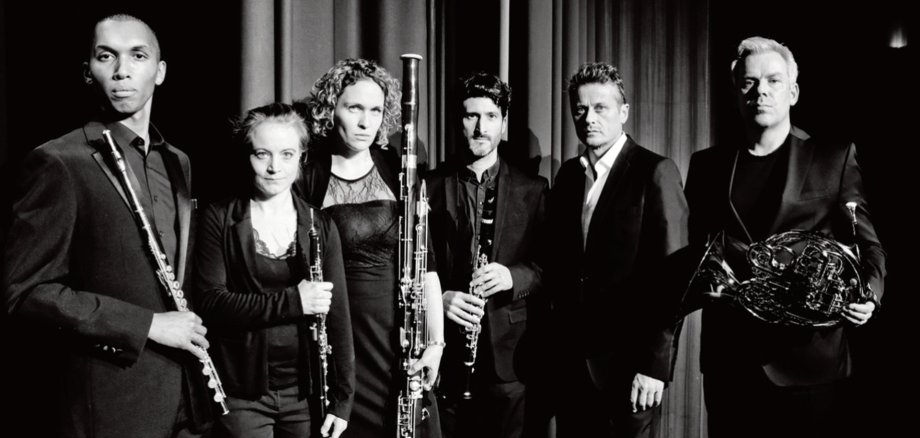
Since 2005, the city and the Shalom Association have jointly organized a commemorative event on January 27. Each event focuses on a different aspect of National Socialist tyranny. Following welcoming speeches by Lord Mayor Frank Frühauf and Shalom Chairman Axel Redmer, this time the event will focus on the period after the end of the Second World War and Germany's liberation from National Socialism. Roman Knižka and the Opus 45 wind quintet - who have already performed at the commemorative event several times - will take us back to the early post-war period between 1945 and 1949 in their program "That a good Germany may flourish...".
The program tells of life at that time - of ruins and hunger winters, displaced persons and returnees, of everyday violence and new cultural beginnings. For each performance, an individual chapter from the respective venue is included. Roman Knižka reports on the events in Idar-Oberstein at the time based on extensive research by Schalom chairman Axel Redmer and the head of the town archive, Dr. Svenja Müller. In addition, he recites literary texts, reports and contemporary testimonies from a country between apocalypse and awakening, from the arrival of the victors, from the confrontation of the Germans with the atrocities of the Nazi regime, the fate of Jewish concentration camp survivors who wandered through the land of the perpetrators as "displaced persons" after their liberation, from hunger-winters, displaced persons and war returnees.
Shortly after the end of the war, forums for new music emerged in completely bombed-out cities such as Darmstadt and Munich. Opus 45 interprets works by the post-war avant-gardists György Ligeti and Karl Amadeus Hartmann as well as other compositions on the pulse of the times by Dmitri Shostakovich and Hanns Eisler. There will also be music by Ludwig van Beethoven, Richard Strauss, Charles Koechlin and Jean Françaix. Swing and contemporary hits, which round off the musical portrait of the era, convey how the young post-war generation in particular developed an often almost insatiable desire for entertainment and dance.